
Midsummer Dreaming

“When you read about the early dreams of radio - radio is a radical, ethereal, surreal medium [that can deliver] this strange disembodied experience... We think radio mainly is there because it’s the news and it’s the sport and it’s two people in a studio yakking… but radio is so much more than 98% of its output. Once upon a time it was quite a radical and disturbing medium. These are, after all, voices coming out of the air at you… you know, spirits.” - Mark Burman
We’ve been thinking a lot lately about the mischievous spirits of radio’s past…
Since its earliest days, radio has been an evaporating medium. Voices slipping into the air in a moment in time before they vanish into the ether.
These sonic hauntings can hold us together - fleetingly - as a collective of listeners, at once intimate and distant from each other. Listening as we lie in bed on the edge of sleep, drive alone in our cars, stand in our kitchens...
“[The radio can] stay with us longer than something merely seen... if only because it’s part of us. Words spoken into the ear, live and breathe, vibrate in the mind for years… ” - Donald McWhinnie, The Art of Radio
Radio that moves us lodges in our bodies - a growing archive that lingers like a half-remembered dream. But in our wider culture the memory of this medium can often be elusive, its formal archives inaccessible or non-existent, a history that disappears into thin air…
What happens to an art form that can’t remember itself?
Lately, we’ve watched as the slipperiness of radio’s imaginative past has invited a painful rewriting of audio’s future possibilities. There can be a sense sometimes that radio or podcasting has always sounded like this - literal, didactic, two people in a studio yakking, telling you things... but tug at the threads of this history and a far messier, more inventive space reveals itself...
Over this summer solstice weekend, we’ve curated a dream-like night of adventurous radio from the archives of BBC Radio 3 and the Third Programme. Presented by Late Junction’s Verity Sharp and airing from sunset on Saturday until the sun rises again on Sunday morning. Listen live from anywhere in the world, or catch up later on BBC Sounds if you’re in the UK.
We hope it offers a glimpse of just how vast and imaginative the radio has always had the potential to be. You’ll hear works like Private Dreams and Public Nightmares, from 1957, the sonic poem that helped birth the BBC’s Radiophonic Workshop; the first Inventions for Radio from 1964, a vivid cascade of voices exploring their experience of the dream state and programmes from Between the Ears - Radio 3’s long-running home for adventurous radio. Our Alan Hall produced the first ever edition of Between the Ears back in 1993, and below you’ll find a short reflection from him on how it came into being.
As part of Midsummer Dreaming, all this week new miniature editions of Between the Ears have been airing each night - documentaries where the boundaries of reality become porous, full of singing frogs, laughter, stillness, a twilight walk and a mountainous ascent. Created by Redzi Bernard, Shira Golden, Jess Shane, Axel Kacoutié, Jenny Davies and Sherre DeLys. You can listen now on BBC Sounds or find them in the Falling Tree Archives.
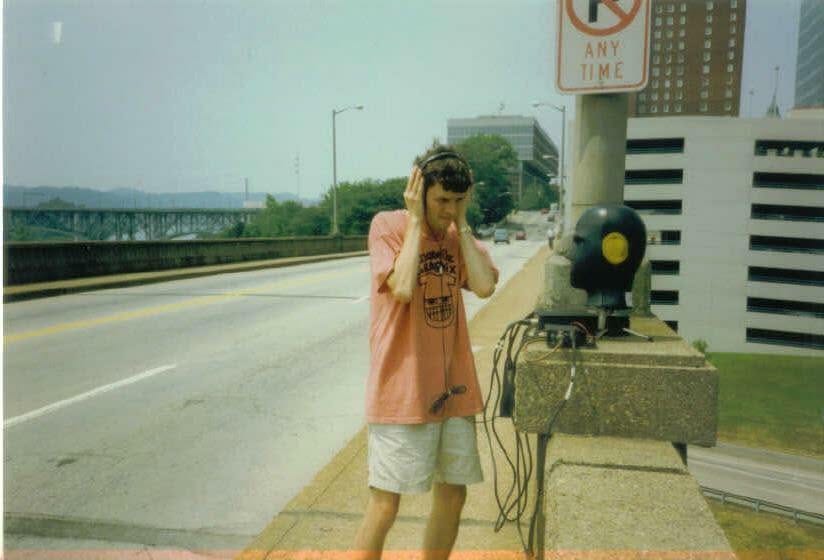
Between the Ears - 1993
Radio was different back then. Early 1993. It was ‘radio’, for one thing – not ‘audio’ – and the word ‘podcast’ wouldn’t be invented for ten years. Things made for radio were intended for a specific place in the schedule – an appointment to listen. And that schedule, on BBC Radio 3 was flexible, a mosaic of programmes of bespoke lengths. The tyranny of the broadcast clock had yet to grip the nation’s cultural network.
I was different back then. About to turn 30, newly a dad, and finding my way as a producer working in contemporary music, and Radio 3’s music sequence ‘shows’, and alert for the first time to creative possibilities in sound that might be available even to a callow young man from a forgotten edge of the country. (Margate was different back then. No DFLs. And Tracey Emin was still waiting in the wings before her sensational arrival on the art scene.)
My world comprised the avant-garde in music – from the modernism of Boulez and Birtwistle, via the aleatoric sound clouds of Ligeti and Lutoslawski to young British composer-performers. It was one of these, Ian Gardiner of the ensemble George W. Welch, who inspired what became Radio 3’s long-running, highly decorated space for imaginative radio, Between the Ears. His group played their own pieces, but also music by John Cage, John White and others of a leftfield persuasion – music that might include junk percussion, wind up gramophones and transistor radios. Music, in other words, that dissolved the distinction between the concert hall and the world beyond, work that reimagined the musical art. So it seemed obvious to ask Ian to think about a piece for radio that might do something similar, to dissolve the borders around ‘music’, ‘documentary’, ‘field recording’, ‘archive’.
BBC Commissioning was different back then, too. It wasn’t formalised in Offers Rounds. Ian and I chatted vaguely about what we might like to do – a ‘piece for radio’ in three or four movements evoking London through the decades with a cast of voices from the BBC Sound Archive. I talked to my editor in New Music. He talked to the Head of Department and she came back with a ‘yes’ from the Controller, cultural impresario Sir John Drummond.
That was Monument. We made it in early 1993, bringing George W. Welch into the BBC’s Maida Vale studio one for a day and then spending a couple of weeks in an editing suite with piles of archive, sfx, new recordings and a digital editing software no one had used before (hats off to Philip Burwell and Lyndon Jones, for what was called back then ‘technical presentation’). It was a wonderfully inventive, if tentative, experience.
The programme – the piece - lasted about 35 minutes. To accommodate it in the schedule, R3 invented a new strand that would be launched in the autumn. As it happens, composer Christopher Fox had been let loose in the Radiophonic Workshop that summer for a couple of weeks. He revisited the sound poetry of Kurt Schwitters and created Three Constructions that also occupied a space between music and poetry and performance. Another radio premiere. Someone had the idea to dig out Barry Bermange and Delia Derbyshire’s Inventions for Radio and someone else found a couple of things from foreign festivals (Heiner Goebbels, I think). That was Between the Ears.
There was a sense that Between the Ears was doing something that radio ought to be doing but had neglected for too long – being, if you like, an art form in itself. This was achieved by approaching that nebulous ambition from the secure ground of musical composition. Monument is through-composed. It has a montage logic, rather than a dramaturgical one. There’s no Story. It opens out and amplifies experience, rather than trying to contain a narrative. It’s a sound piece to be inhabited.
And it was a success. Radio 3 received its first coveted Prix Italia, an ambition Ian and I hadn’t realised had fuelled the commission, and Between the Ears returned the following year and then again for the next thirty plus, growing to twelve episodes annually and gathering gongs along the way. Why mention the awards? (Is there a phrase in this industry more hollow than ‘award-winning’?) Because they can help work stand out. During a pause in the relentless production cycle, they offer a moment of recognition from peers in the industry - from listeners, from critics, from those who care - that the medium’s potential is being honoured. Radio – audio – has always had imaginative possibilities that open it out beyond the everyday - beyond yadda yadda, beyond promo, beyond news – and now as in 1993 these needn’t be exceptional. They are integral to the experience of close listening, of paying attention to what lies below the surface, of learning from what a psychologist might call musical rather than informational listening. There, now as then, lie the deeper rewards.
Short Cuts - Open Pitching Round
As some of radio’s mischievous spirits return to the airwaves this weekend, we’re delighted to say our own series Short Cuts is making a return next year (back from the dead!).
In the first collaboration of its kind on Radio 4 - the BBC, CBC in Canada and ABC in Australia are co-funding a new series of 12 episodes in 2027. They’ll air on the radio in all three countries as well as returning to the Short Cuts podcast.
Our pitching round is currently open until midnight on 1st July. You can pitch ideas and learn more about what we’re looking for here.
Series producer Eleanor McDowall will also be taking part in an online Q&A about the pitching process with All the Best in Australia next Wednesday at 7pm AEST or 10am UK time. Sign up and details are here.
What We’re Listening To…
Resonance FM: The Art of Listening
Just before Midsummer Dreaming airs on BBC Radio 3, there’s an Archive on 4 presented by Stewart Lee and produced by Simon Hollis of Brook Lapping productions all about one of our favourite homes for radio art - the wonderful Resonance FM. Their new Development Coordinator, Iñaki Ramirez Romero, recently shared a quote from Resonance’s first magazine back in 1998, which we loved, “Why isn’t there a museum of modern art for sound in the same way as there is for the visual arts? The most suitable gallery space for the audio arts is the sound-only medium of radio. And one of the great things about radio is that everyone has one…” — Phil England
Between the Ears - Project Jericho
Having spent the last couple of months going through the 33 year history of Between the Ears, we re-encountered this inventive (and depressingly still relevant) hybrid fiction-documentary on sonic warfare. Created by Gregory Whitehead and Mark Burman in 2012. You can listen, and learn more about Project Jericho, on Gregory’s website.
This Croatian documentary-feature from 1975 is a reminder of just what’s been possible on the airwaves in the past. Sound and scene-rich, it trusts the listener to immerse themselves in the world of the Plitvice Lakes. “What I do is writing with a microphone. Our lexicon is the sound material we shape. We use speech, not language. All these terms: documentary radio drama, radio feature, acoustic film—are not quite appropriate. It is, in fact, radio itself… Documentary radio drama uses the means of the medium itself.” (Producer, Zvonimir Bajsić in an interview). Listen on Radio Atlas.
A ghostly wander past singing walls, over underground rivers and past a chorus of haunted air conditioners... we particularly enjoyed Matthew Sweet’s curse on those who might hollow out our imaginative spaces in order to build new luxury flats... Matthew Sweet’s sonic haunting of the studios at Maida Vale aired a few months back on BBC Radio 4, listen on BBC Sounds. It was produced by Debbie Kilbride, for Mighty Real productions.
This is the first in our new series of seasonal newsletters, sent out four times a year. To learn more about our work visit our website or follow us on Instagram or Blue Sky.